The Critical Threshold: Why High-Traffic Facilities Must Treat Entrances as Infrastructure
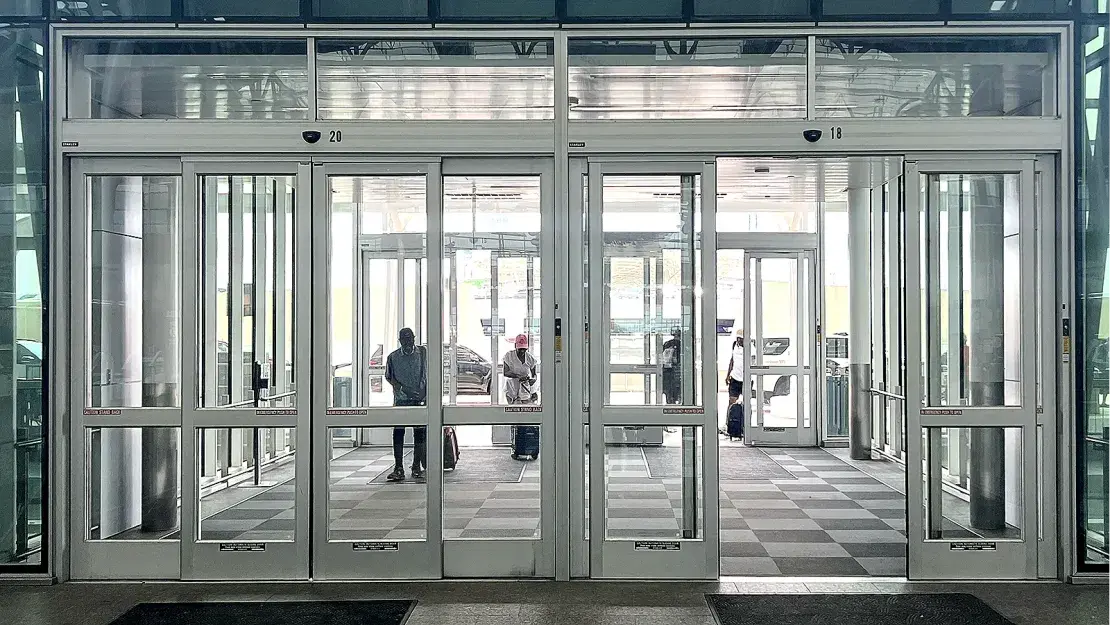
High-traffic entrances face continuous, extreme operational stress that standard architectural hardware cannot withstand. Under-specifying these entry points can lead to equipment failure and even injuries down the road. In this blog, we discuss the main considerations and solutions to help ensuring these critical entrances are properly specified.
When facility leaders discuss critical building infrastructure, the conversation usually centers on HVAC systems, elevators, security technology, electrical equipment, and building automation platforms. These systems receive attention because their impact on operations is obvious.
Entrances, meanwhile, are often viewed as architectural elements rather than operational assets.
Yet in many high traffic environments, entrances are among the hardest-working systems in the facility. They influence occupant flow, accessibility, safety, energy performance, and first impressions. More importantly, they serve as a daily operational link between the building and everyone who enters it.
As commercial buildings, healthcare facilities, educational campuses, airports, and retail environments become increasingly focused on occupant experience and operational efficiency, the architects designing them and the facility leaders managing them should begin viewing entrances through the same lens as other critical infrastructure systems.
Every Opening Cycle Impacts Operations
In high traffic environments, automatic doors may cycle thousands of times per day, creating continuous wear on moving components. These entrances are constantly interacting with occupants, unlike many building components that operate behind the scenes.
So when performance issues surface, the consequences extend beyond inconvenience. Occupant flow and accessibility is impacted and safety could become compromised. In healthcare environments, delays can affect patient movement. In transportation facilities, congestion can quickly develop. In retail settings, customer experience can suffer before visitors even enter the building.
Because entrances sit at the intersection of safety, accessibility, security, and traffic management, their reliability has a direct impact on overall facility performance.
Why Lifecycle Performance Matters More Than Initial Cost
Building owners routinely evaluate HVAC equipment, lighting systems, and other major assets based on lifecycle value rather than purchase price alone. Entrances deserve similar consideration.
A lower-cost entrance solution may appear attractive during procurement, but frequent service calls, replacement parts, downtime, and excessive repairs can significantly increase total ownership costs over time.
For high traffic facilities, evaluating an entrance solely on upfront cost often overlooks the operational realities that emerge after installation. The more valuable question is not what the system costs today, but how it will perform after hundreds of thousands, or even millions, of operating cycles.
Reliability, durability, serviceability, safety, and expected lifespan should be viewed as core performance metrics, not secondary considerations.

The Reality of High Traffic Design
Specifying systems based on appearance rather than anticipated use is one of the most common mistakes in planning.
High traffic facilities place constant stress on entrance systems, requiring components that can withstand sustained operation without sacrificing performance. This is where durability becomes an operational necessity instead of a design preference.
Robust hardware, high cycle components, corrosion resistant materials, and simplified mechanical designs are critical for longer service life and minimizing repair calls and costs. They may not be visible to occupants, but they can significantly affect long-term reliability.
The most successful entrance systems perform consistently under demanding conditions. The ones that fail are most often the ones that simply meet minimum functional requirements.
More Than Just Basic Access
STANLEY Access Technologies driving purpose is to make the world more accessible. To accomplish this, entrances have to be more than simply basic access. points The impact of of entrances goes way beyond function and extends well beyond opening and closing.
Entrances influence accessibility compliance, occupant comfort, energy efficiency, and the overall perception of a facility. They affect how people move through spaces and how efficiently buildings operate during peak periods. In many ways, they serve as the first and most frequently used touchpoint within the built environment.
As organizations continue investing in technologies and strategies that improve building performance, entrances should not be overlooked simply because they are familiar.
Like HVAC systems, elevators, and access control platforms, entrances perform a critical operational role every day. The difference is that their importance is often most visible when they stop working.
For high traffic facilities, that reality offers an important lesson: the front door is not merely an architectural feature. It is a performance system. And like any piece of critical infrastructure, its value should be measured by the reliability, efficiency, and operational support it provides throughout the life of the building.