Healthcare entrances play a critical role in infection control, life safety compliance, and seamless patient flow, making specialized design more vital than ever. As featured in FMLink, STANLEY Access Technologies brings industry-leading expertise to help architects and facility managers solve these complex access challenges from the earliest stages of design.
When a leading information resource for facilities managers like FMLink goes looking for guidance on the evolving complexities of healthcare entrance design, the team at STANLEY Access Technologies will at the chance to share our knowledge and expertise. And with good reason: in a hospital or healthcare facility, a door is rarely just a door. It is a sterile barrier, a life-safety pathway, an accessible gateway, and often the very first touchpoint in a patient’s journey. As healthcare design rapidly evolves, getting these openings right requires deep industry expertise, forward-thinking innovation, and meticulous specification from day one.
The Evolving Demands of Healthcare Access
Designing entrances for healthcare environments has always been a balancing act between safety, accessibility, and security. However, recent years have accelerated the need for specialized access strategies that solve several mission-critical challenges:
1. Touchless Access and Infection Prevention
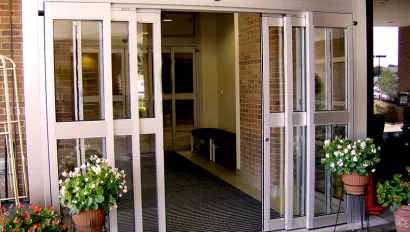
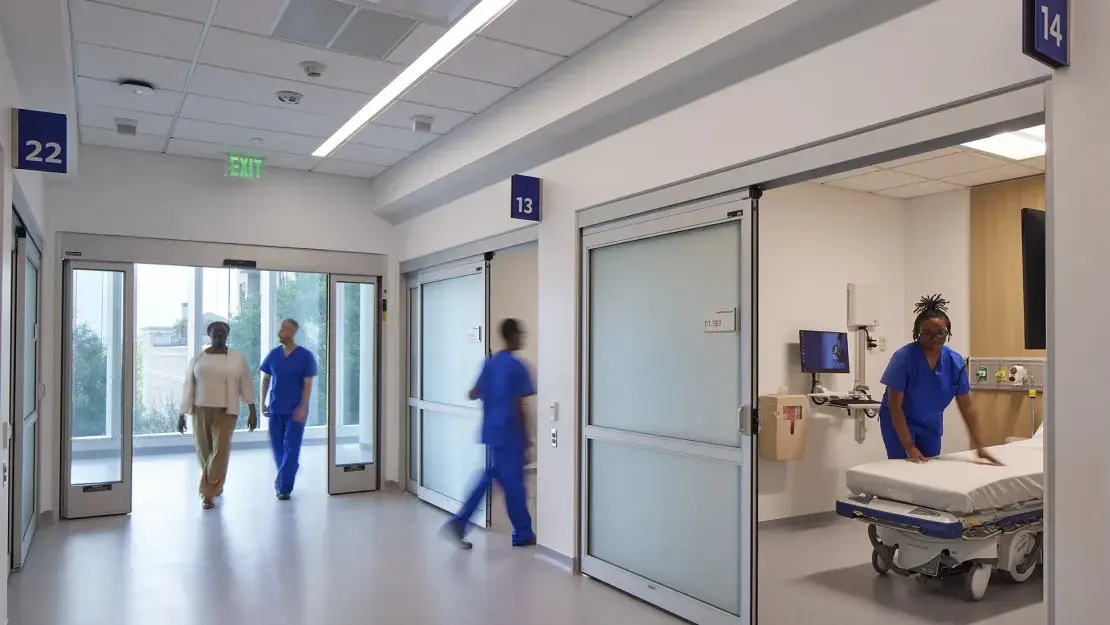
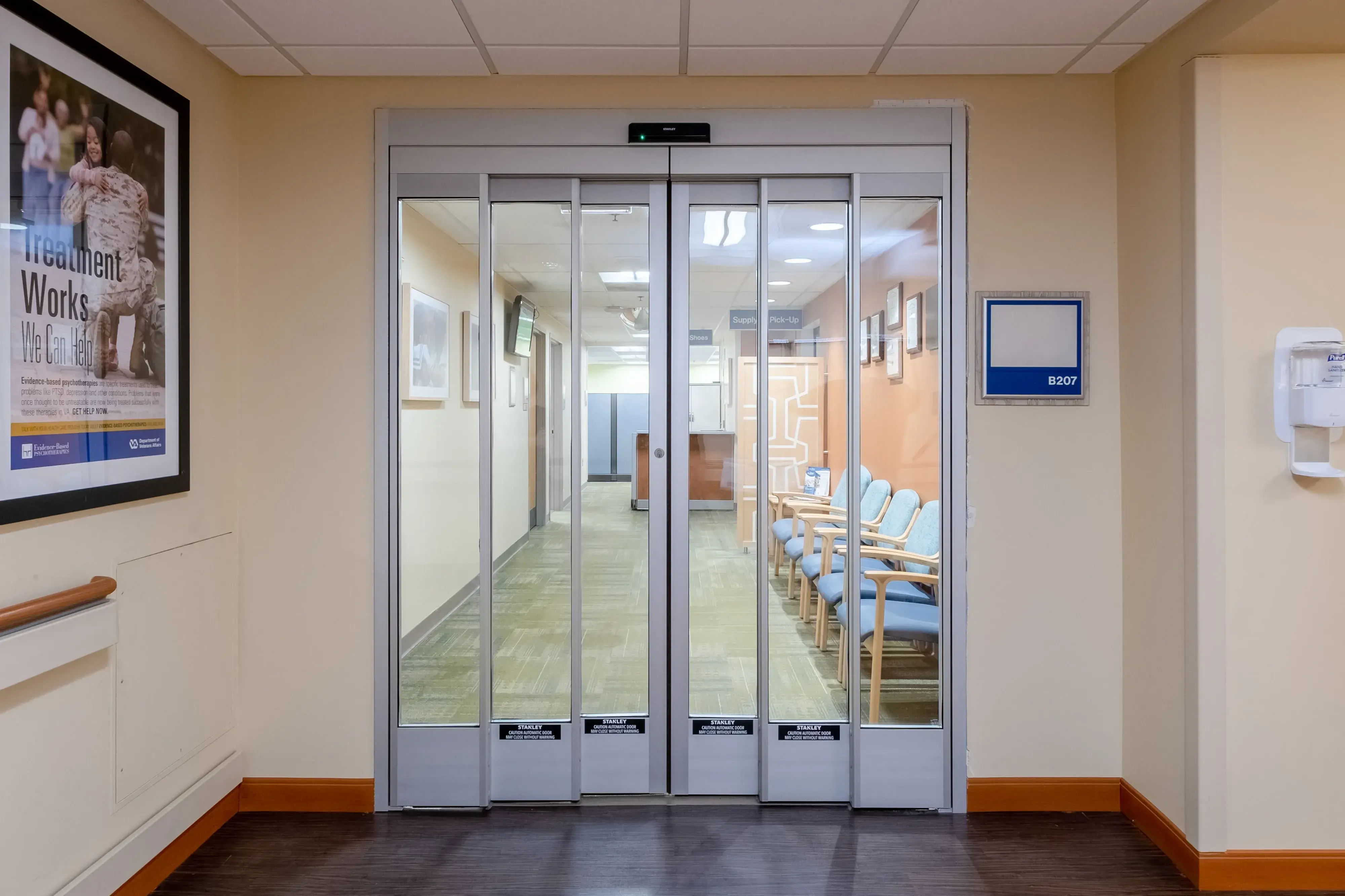
Hand hygiene and touchless environments are vital lines of defense against Healthcare-Associated Infections (HAIs). Automated sliding, swinging, and revolving doors equipped with hands-free wave sensors allow patients, staff, and gurneys to move seamlessly between sterile and non-sterile zones without contacting high-touch surfaces.
2. Specialized Patient Environments (ICU, CCU & Isolation)
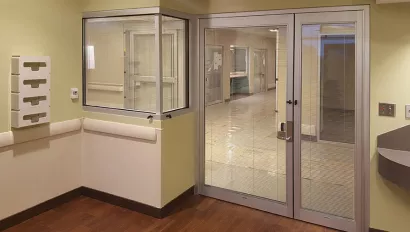
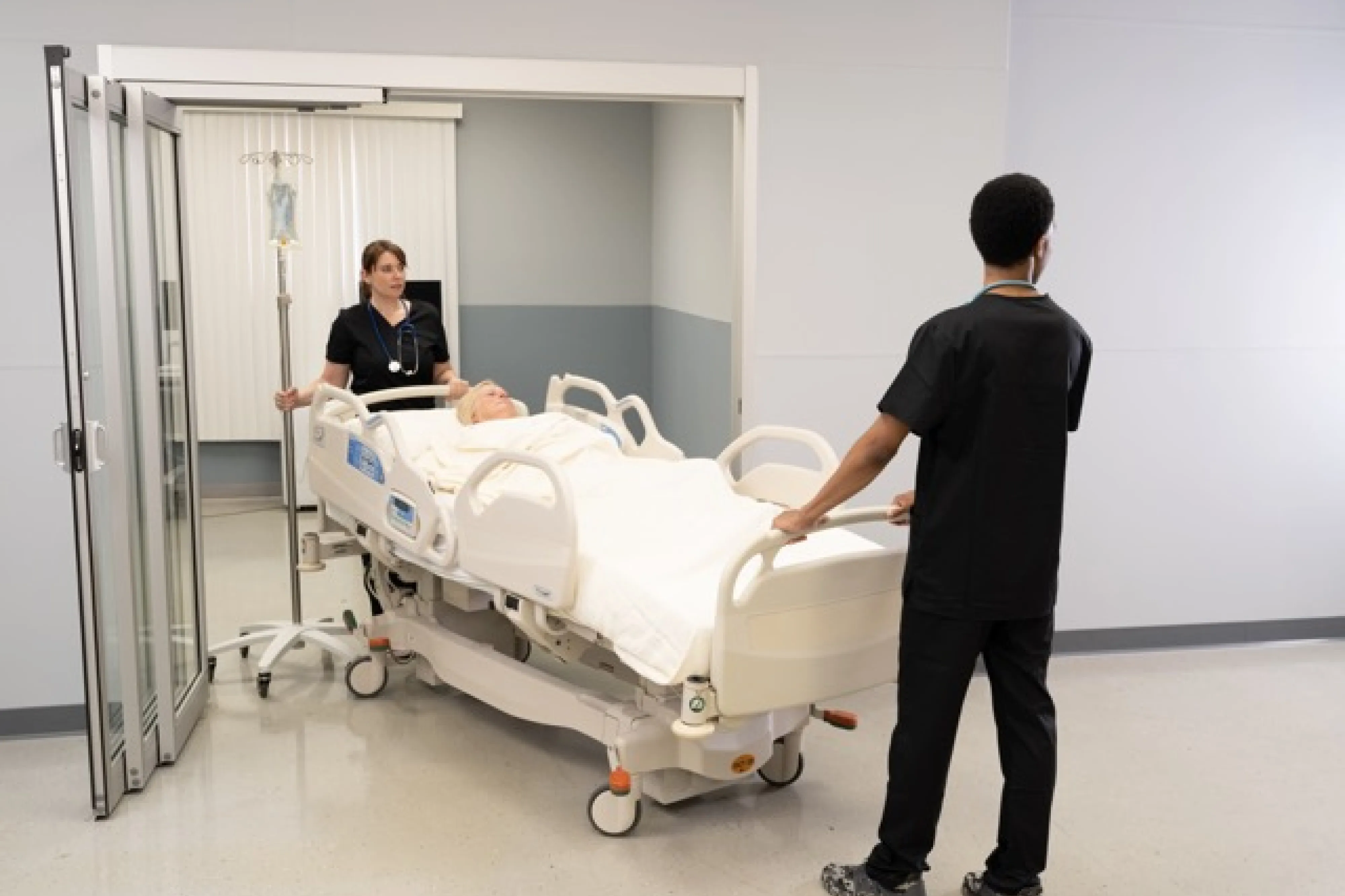
From Airborne Infection Isolation Rooms (AIIR) to Intensive Care Units, openings must meet strict pressure, sealing, and visibility requirements. STANLEY’s specialized ICU/CCU sliding and folding door systems are engineered for smoke and air infiltration control, rapid breakaway egress in emergencies, and trackless designs that simplify sanitization.
3. Navigating Complex Codes and Compliance
Healthcare facilities face some of the most rigorous regulatory standards in the built environment—including ADA (Americans with Disabilities Act), NFPA 101 (Life Safety Code), IBC (International Building Code), and ANSI/BHMA standards. Specifying the wrong door or hardware can lead to costly delays, failed inspections, or compromised life safety.
4. Acoustic Comfort and Energy Efficiency
Healing environments require quiet. High-traffic automatic entrances must operate smoothly and silently while maintaining building thermal envelopes to reduce energy consumption in 24/7 operating facilities.
Why Early Specification Matters
Too often, entrance solutions are treated as standard commodity items late in the design phase. But when architectural teams bring automatic door specialists into the conversation early, the entire project benefits:
Eliminate Costly Change Orders: Proactively coordinate electrical, structural, and access control integrations before construction begins.
Customized Traffic Flow: Right-size openings for gurney clearance, bariatric transport, and peak pedestrian hours.
Future-Proofing Facilities: Select non-proprietary, serviceable technologies built to handle decades of relentless commercial use.
Let’s Build Safer Healthcare Environments Together
At STANLEY Access Technologies, we don’t just manufacture industry-leading automatic doors; we serve as consultative partners to architects, design firms, and facility directors worldwide. Whether you are designing a state-of-the-art emergency department, renovating a regional medical center, or specifying specialized ICU suites, precision starts at the specification stage. Our dedicated Specifications and Consulting Team is ready to help you craft detailed, code-compliant, and performance-driven Division 08 specifications tailored specifically to your healthcare project.