
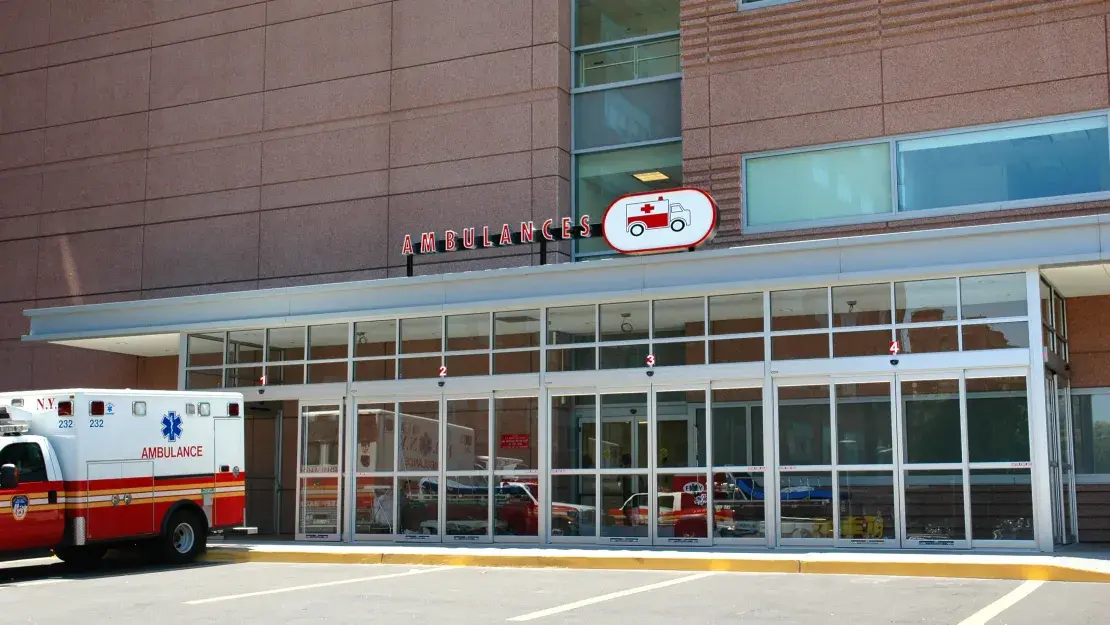
FARMINGTON, Conn (Oct. 10, 2026) - Entrances determine how easily people enter or exit healthcare buildings, how efficiently staff move through the space, and how well the facility manages accessibility, security, comfort, and traffic flow. This makes the quality of the entrance equipment a critical design choice. To learn more how doors affect this aspect of healthcare design, FMLink turned to STANLEY Access Technologies' Business Development Manager Brian Fochler.
Start with the entrance experience
Healthcare entrances serve people with a wide range of needs. A patient may be using a wheelchair, walker, or crutches. A visitor may be assisting a family member. Staff may be moving equipment, supplies, or patients between areas. Others may be entering the building for the first time and trying to determine where to go next.
Facility leaders should consider who uses each entrance, the volume and direction of traffic, what occupants are likely to move through the opening, and when peak periods occur. Local building codes, industry best practices, and accessibility concerns should also be systematically taken into account.
An entrance that works for a small administrative area may not be appropriate for a main hospital lobby, outpatient center, or emergency department. The system should be selected based on how the space actually operates rather than appearance alone.
Matching the system to the environment
Different entrance systems serve different operational purposes.
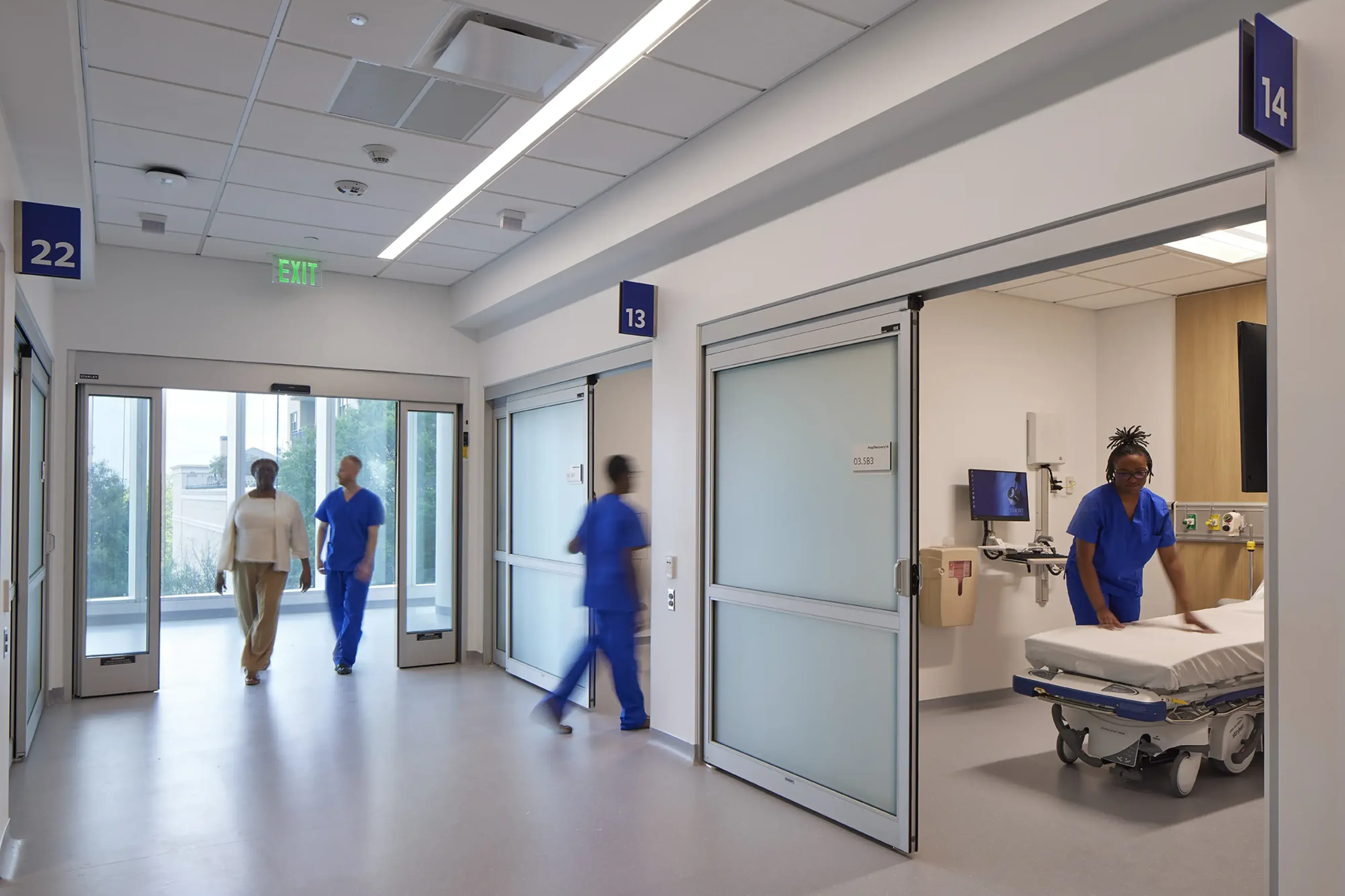
Automatic sliding doors are commonly used in high-volume healthcare environments because they support bidirectional traffic and provide a wide opening without requiring users to push or pull a door. This can help patients with mobility limitations and staff moving wheelchairs, equipment, gurneys, carts, or supplies.
Automatic swing door operators may be practical where sliding doors are not feasible. They can automate existing entrances and improve accessibility without requiring significant changes to the building footprint.
Revolving doors may be appropriate at larger public entrances where energy performance is a priority. By limiting the exchange of indoor and outdoor air, they can help reduce demand on heating and cooling systems. They should generally be paired with an adjacent accessible entrance.
There is no single solution for every part of a healthcare campus. The goal is to match the technology to the traffic demands, accessibility needs, and operational priorities of each space.
How entrances affect patient and staff flow
When an entrance system hesitates, closes inconsistently, or is taken out of service, the impact can extend beyond the nuisance doorway.
A malfunctioning entrance can create congestion, limit accessibility, or force people to use an alternate route. During appointment surges, shift changes, visiting hours, or severe weather, even a short interruption can affect movement throughout the facility, disrupt already-tight schedules of patients and providers alike, and place additional pressure on staff.
In high-traffic healthcare settings, automatic doors may cycle hundreds of thousands of times annually. A system operating 500 times per day, for example, would complete more than 180,000 cycles in one year. That makes lifecycle performance, durability, and preventive maintenance critical selection criteria.
Inherently, sound products are one way to reduce downtime. Systems designed with durable materials, fewer moving parts, sealed drive systems, and modular wear components may require fewer service interventions over time, supporting long-term reliability and operational continuity. Combining overall intelligence regarding these automatic door systems with regular inspections and good maintenance practices will also combat interruptions to the facility operations and disruptions to the stakeholder experience.
Supporting accessibility with dignity
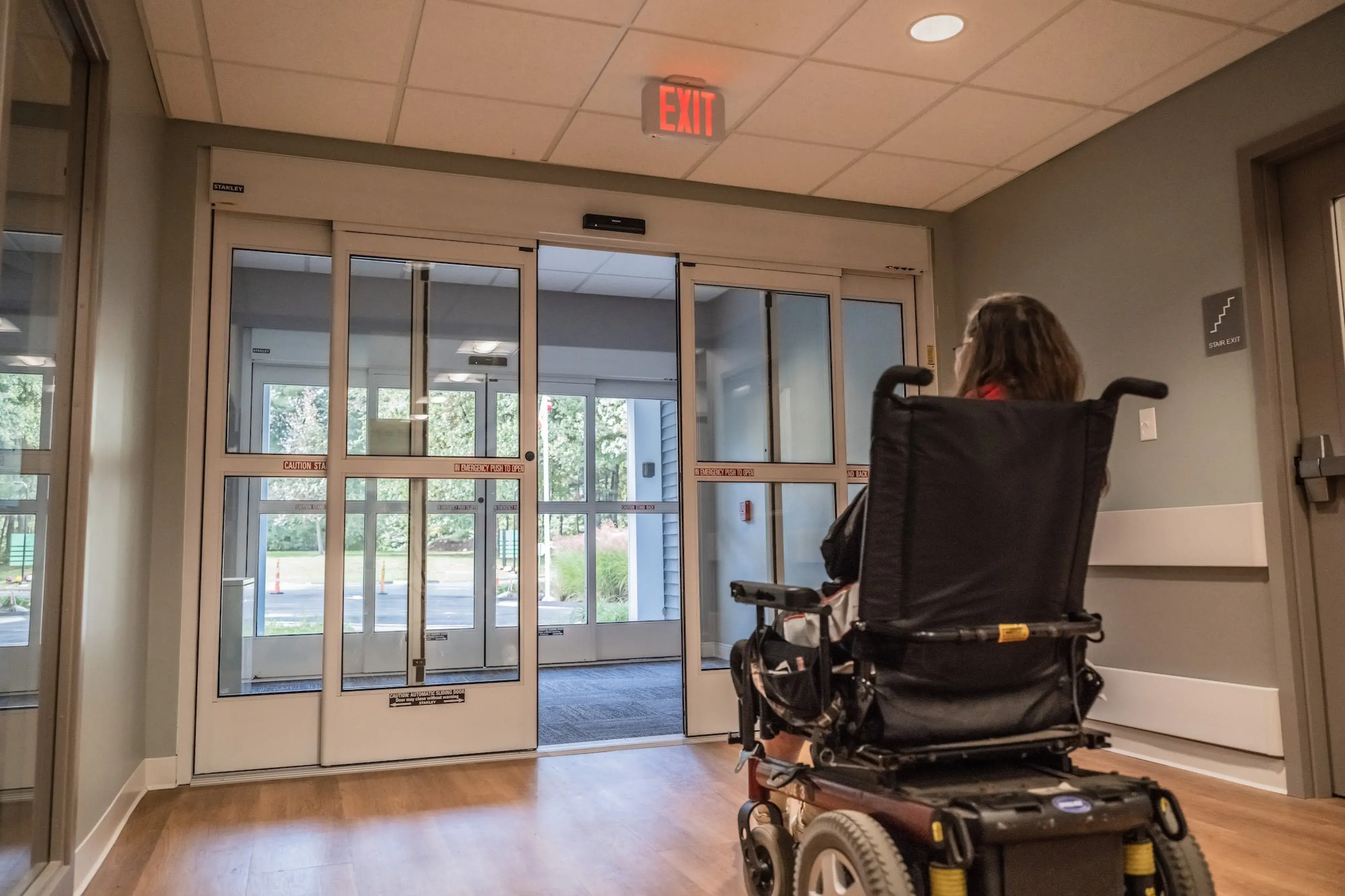
Accessibility in healthcare is not only a compliance consideration. It affects whether patients can enter safely, independently, and with dignity. More than one in four U.S. adults has some type of disability, according to the CDC, including conditions affecting mobility, vision, hearing, cognition, and independent living.
Entrance design should account for clear pathways, appropriate opening widths, reliable activation, sufficient timing, and smooth transitions between exterior and interior spaces. Patients should not have to struggle with a heavy door, wait for assistance, or navigate around obstacles at a moment that may already feel stressful.
Facilities should also consider how the entrance connects to the broader arrival experience. Door placement, sightlines, signage, lighting, and the transition to reception all influence whether people understand where to go next for their service
Balancing security with accessible entry
Healthcare facilities must remain open and welcoming while controlling access to sensitive or restricted areas. The entrance is where those priorities intersect.
The U.S. Department of Health and Human Services identifies facility access controls as a physical safeguard under the HIPAA Security Rule. Its guidance calls for limiting physical access while ensuring authorized access and notes that security plans may include cameras, alarms, employee and visitor badges, and electronic or mechanical security systems.
Entrance systems should therefore be considered as part of the broader security platform. Automatic doors may need to coordinate with credential readers, visitor-management processes, surveillance systems, after-hours controls, or emergency lockdown procedures.
Integration should not come at the expense of accessibility or efficient flow. Facilities, security, clinical operations, IT, and accessibility stakeholders should determine who requires access, how entry changes by time of day, and how the system should respond during emergencies or power interruptions. Early coordination can reduce bottlenecks and support both authorized access and safe egress.
The connection to comfort and energy use
Each opening cycle allows some exchange between indoor and outdoor air. In a facility with continuous traffic, that can place additional demand on HVAC systems and make it more difficult to maintain a consistent interior temperature, further adding to operational costs.
Vestibules, revolving doors where appropriate, and entrance systems matched to traffic patterns can help limit unnecessary air exchange. This matters when patients and visitors wait near the entrance or staff work in adjacent reception and security areas.
Managing entrances throughout their lifecycle
Selecting the right system is only the first step. Long-term performance also depends on how the entrance is inspected, serviced, and supported.
Staff should perform daily safety checks in accordance with the system’s owner’s manual. Unusual sounds, hesitation, inconsistent movement, or sensor irregularities may indicate that an issue is developing. If a system is malfunctioning or an unsafe condition exists, it should be removed from service, and the automatic door service provider should be contacted.
Tracks and sensors should be kept clear of dirt and debris. Annual inspections by AAADM-certified technicians can help evaluate safety sensors, mechanical components, and timing or speed settings.
Facilities teams should document service activity. Maintenance records can reveal recurring issues, increasing repair needs, or changes in reliability, helping leaders decide whether continued repair remains practical or replacement should be included in future capital planning.
Treating the entrance as part of the care environment
Healthcare facility leaders already evaluate building systems based on their impact on safety, efficiency, and continuity of operations. Entrances should receive the same attention.
The right system can improve accessibility, support staff movement, reduce congestion, coordinate security processes, and help the facility maintain more consistent performance. Proactive inspection and lifecycle planning can also reduce the risk of unexpected downtime.
The entrance may not be part of clinical care itself, but it affects how people reach that care and how the facility operates around them. For patients, visitors, and staff, the healthcare experience does not begin at the reception desk-it begins at the door.
Healthcare entrances are mission-critical operational systems that impact accessibility, security, comfort and traffic flow."


