Choosing the right automatic door for your storefront is a critical decision for your business. That's why we created this tutorial to help you understand what is important to consider for your storefront.
Choosing the right automatic door for your storefront matters — it affects customer flow, accessibility, energy bills, safety, and long‑term costs. Use the checklist and guidance below to pick the best solution for your location, business type, and budget.
Key Factors to Consider
- Traffic volume and peak flows: estimate daily and peak hourly customers (e.g., 200/day vs 2,000/day) to determine duty cycle, motor size, and sensor design
- Use case and customer profile for throughput, aesthetics, and the need to accommodate oversized equipment/product
- Climate and weather exposure
- ADA requirements, local building/fire codes, and safety standards (common standards: ANSI/BHMA A156.10 in the U.S., EN 16005 in Europe).
- Security need for access control and safety
- Energy performance to reduce HVAC load
- Needed service: availability of local installers and parts, warranties, recommended planned service intervals
- Budget and total cost of ownership (purchase, install, energy, maintenance, downtime)
Automatic Door Types
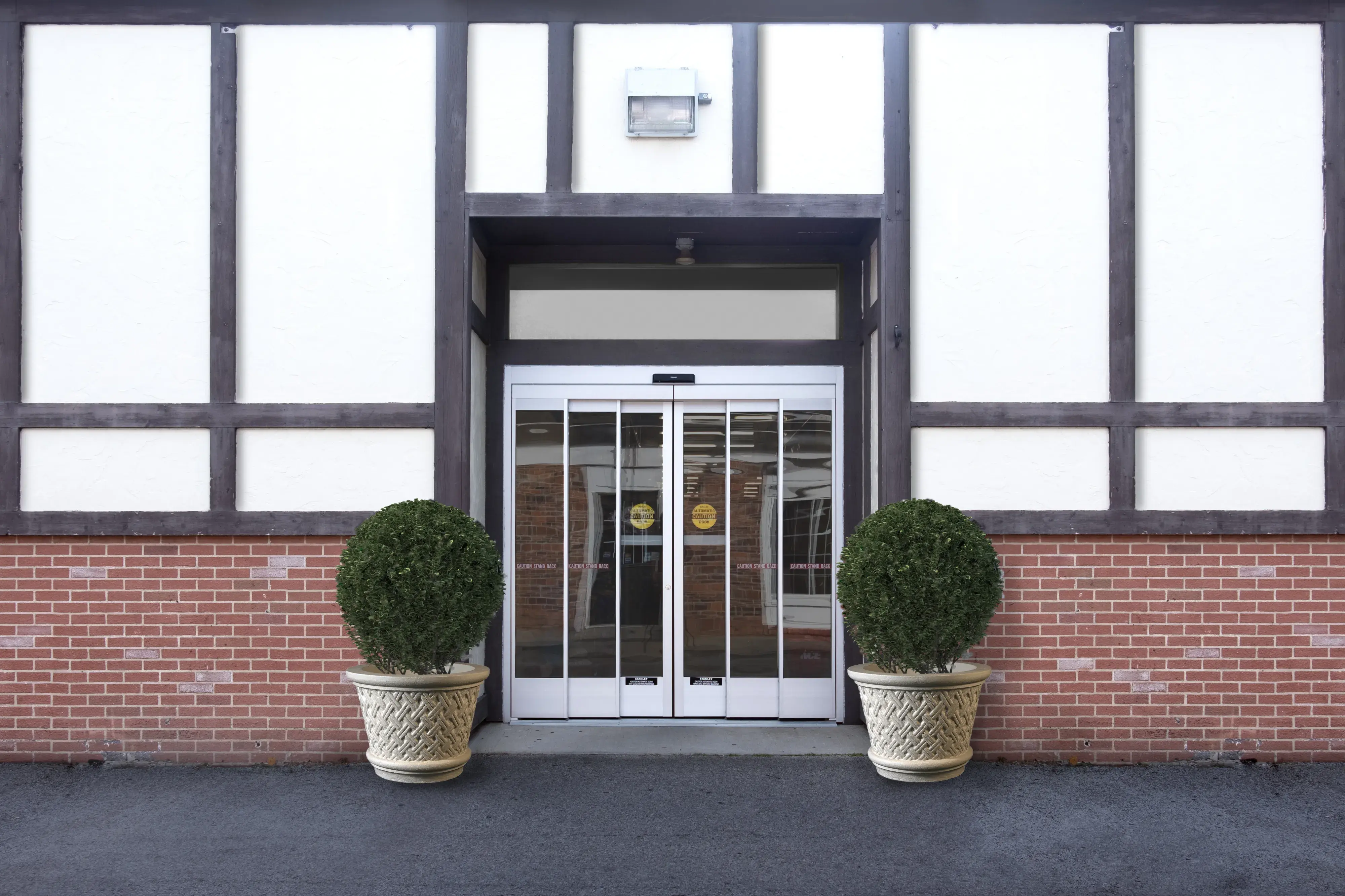
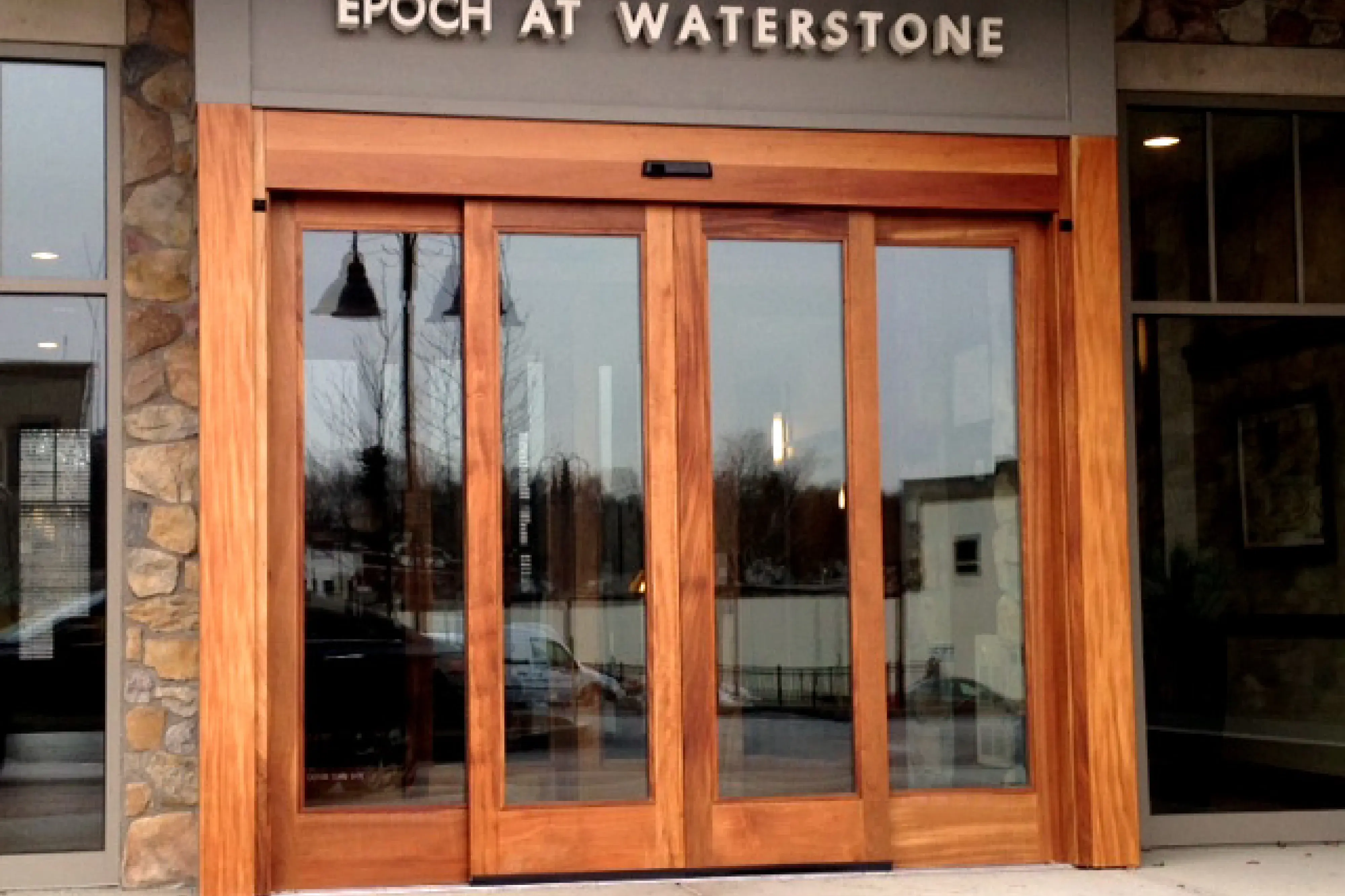
- Sliding (single, bi‑parting, telescoping): best for high throughput, good ADA access, space efficient, common for QSR and retail. Choose heavy‑duty models for very high cycles.
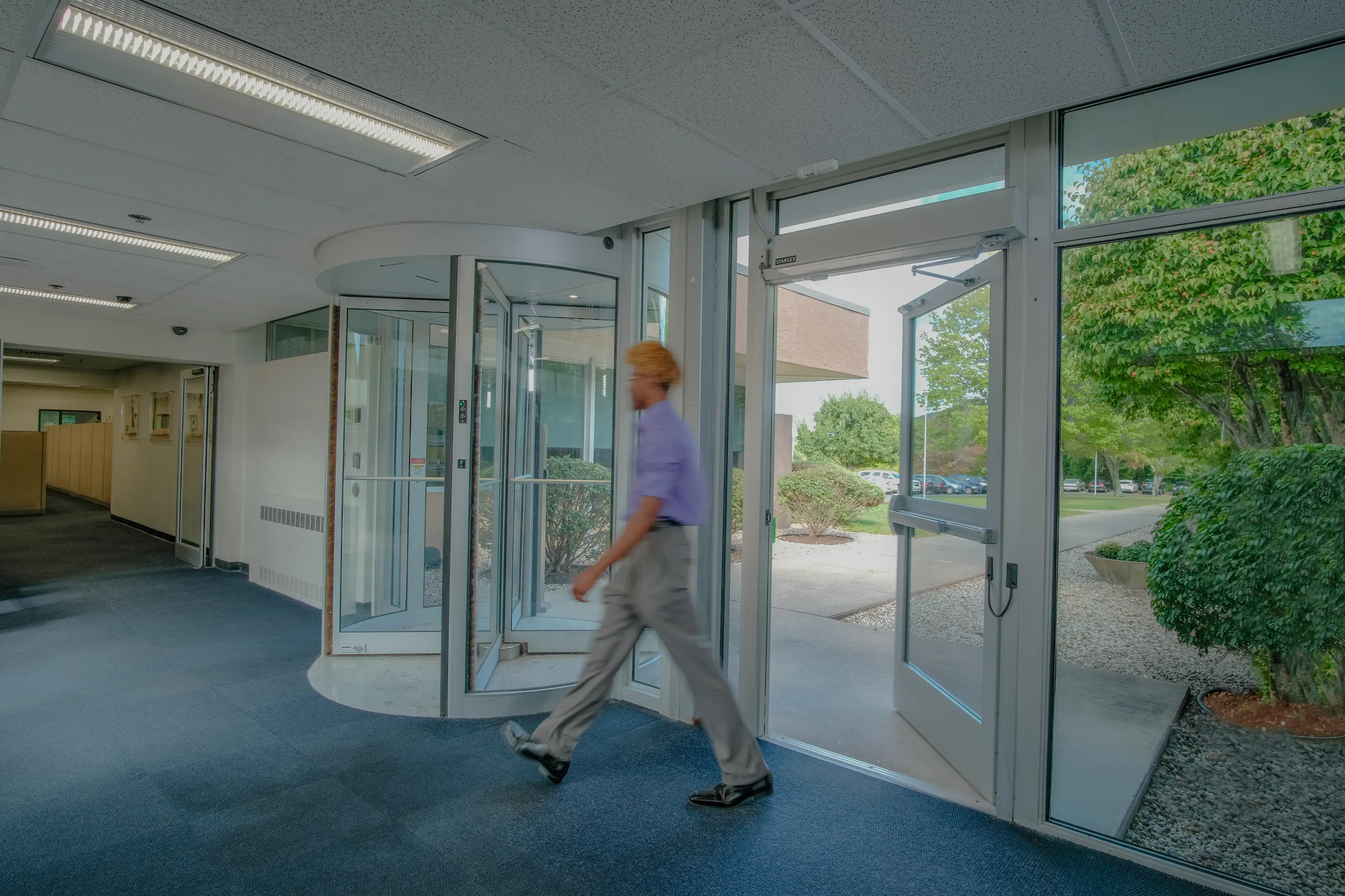
- Swing (power‑assisted): good where sliding isn’t possible; requires clear swing space and more weatherproofing.
- Revolving: excellent energy savings in cold climates (minimizes air exchange) and steady throughput; can complicate accessibility (provide adjacent accessible door).
- Folding/bi-fold: for wide clearances where overhead is limited.
Practical Selection Guide
Use this guide to help you determine which automatic door and company will be the best fit for your needs:
- Assess your facility's needs by measuring the opening, noting peak flow rates, weather exposure, and take photos
- Define priorities including throughput, energy savings, security, and aesthetics
- Create a shortlist of door types that meet those priorities (sliding vs revolving vs swing)
- Request detailed specs and references from manufacturers/installers (cycles/day, warranty, case studies)
- Get multiple quotes including installation, structural work, electrical, service and any HVAC considerations.
- Ask for an on‑site demo or visit installed references when possible
- Confirm code compliance within your jurisdiction and test integration with fire alarm/controls
- Plan for commissioning, staff training, and a scheduled service contract
Questions to Ask Any Vendor or Installer
What is the rated duty cycle (cycles/day) and expected lifespan for this model?
Can you provide case studies for similar businesses/traffic volumes?
How does this system behave on power loss or fire alarm?
What sensors and safety systems are included? Are they redundant?
What are the wind load and anchoring requirements for my storefront?
What is the lead time, installation timeline, and required downtime during install?
What is included in warranty, and what are typical maintenance intervals and costs?
Do you offer planned and emergency service agreements?
How Can We Help You Today?
Disclaimer:
This guide is provided for educational and informational purposes only. It is not intended to constitute legal, regulatory, or professional advice, nor does it create any legal obligation or establish any professional relationship. Readers should consult with qualified legal, regulatory, or industry professionals and their local Authority Having Jurisdiction (AHJ) to ensure compliance with applicable laws, codes, and regulations specific to their location and situation. The author and distributor disclaim any liability for actions taken based on the information provided herein.